
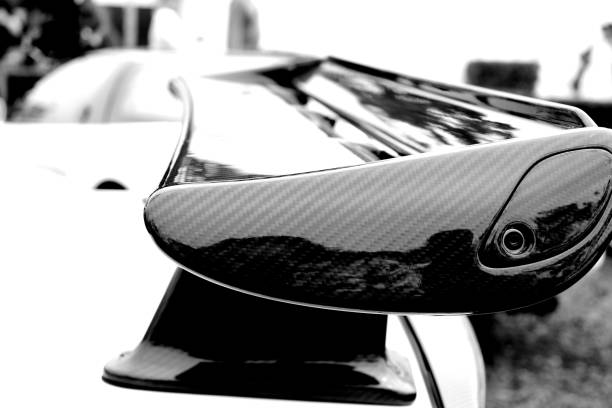
In the world of high-performance tuning, weight is the enemy of speed. Many drivers focus solely on increasing engine output to go faster. However, reducing vehicle mass provides a far more “pure” performance gain. Professional racers often say that losing weight is like gaining free horsepower. Using high-quality carbon fiber body kits is the most effective way to shed pounds. This guide explores the mathematical and mechanical advantages of professional lightweighting. We help you understand why “less is more” on the track and the street.
1. The Three Major Benefits of Lightweighting
Reducing your car’s weight improves every single aspect of the driving dynamics. It is a holistic upgrade that an engine tune cannot match.
Faster Acceleration
Losing weight directly improves your power-to-weight ratio. Consequently, the engine has less mass to push forward during a launch. As a general rule, every 10kg saved reduces your 0-100km/h time by 0.05 seconds. Therefore, a 100kg reduction can shave a half-second off your sprint. This makes your car feel significantly more energetic and responsive.
Shorter Braking Distances
Physics dictates that a lighter object has less kinetic energy and inertia. Consequently, your braking system can stop the vehicle much more quickly. You will notice a significant reduction in brake fade during spirited driving. Therefore, you can stay on the gas longer before entering a corner. This provides a massive competitive advantage during track days or mountain runs.
Sharper Handling and Response
Reducing weight—especially above the beltline—lowers the center of gravity. Furthermore, carbon fiber reduces “unsprung mass” when used in specific areas. Consequently, your suspension reacts to road changes with much higher precision. The car turns into corners with less body roll and more grip. Therefore, the entire driving experience becomes more “surgical” and connected.
2. Weight Reduction Data: Factory vs. Carbon Fiber
Replacing heavy steel or aluminum panels with carbon fiber body kits yields instant results. Here is a typical weight-saving breakdown for a performance sedan.
| Component | Factory Weight | Carbon Fiber Weight | Total Weight Saved |
| Hood (Bonnet) | 15–20 kg | 5–8 kg | 10 kg+ |
| Trunk Lid | 10–15 kg | 3–5 kg | 8 kg+ |
| Roof Panel | 8–12 kg | 2–4 kg | 6 kg+ |
Consequently, replacing just these three panels saves nearly 25kg of high-positioned weight. This significantly reduces the “pendulum effect” during fast directional changes. Therefore, your car feels lighter on its feet and more balanced.
3. The Value for Performance Players
For serious enthusiasts, lightweighting is the most sophisticated form of modification. It improves performance without stressing the engine or transmission components.
-
Lower Consumables Cost: Lighter cars cause less wear on tires and brake pads.
-
Better Fuel Efficiency: You require less energy to maintain high cruising speeds.
-
Timeless Aesthetics: The raw carbon weave adds a high-tech, aggressive visual appeal.
Consequently, carbon fiber body kits represent a dual-purpose investment in speed and style. You are not just changing a part; you are re-engineering the vehicle. Therefore, prioritize weight loss over raw power for a truly balanced machine.
Conclusion: Redefining Your Power-to-Weight Ratio
Speed is a delicate balance between force and resistance. Every gram you remove from your chassis makes your existing horsepower more effective.
Stop fighting against the laws of physics with heavy factory parts. Embrace the carbon fiber revolution to unlock your car’s true potential. You will feel the difference in every turn and every stop. High-quality carbon fiber body kits are the ultimate tool for performance perfection. Let lightweight engineering transform your driving experience into something extraordinary today. Your car deserves to be as light as a feather and as strong as steel.
